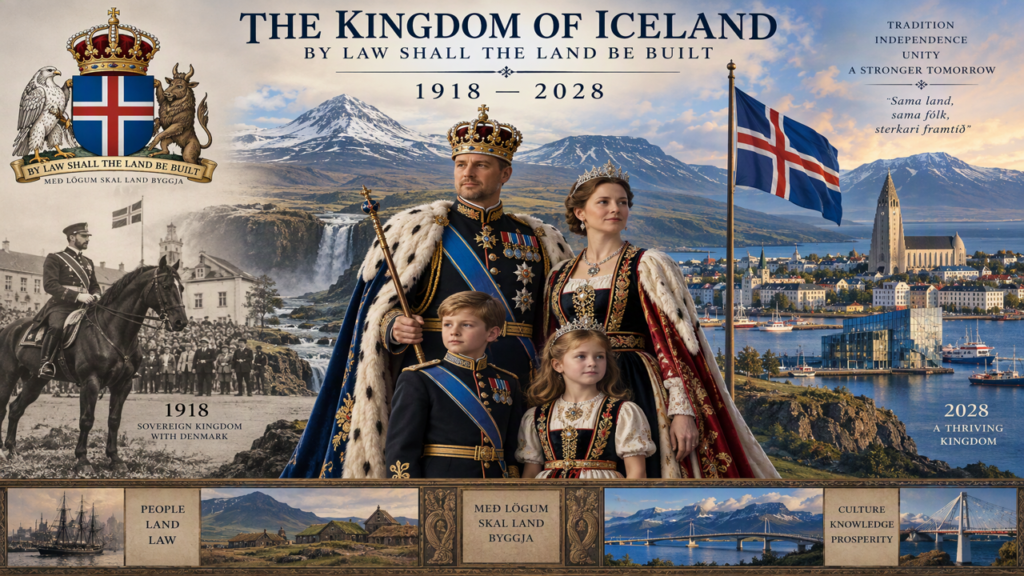
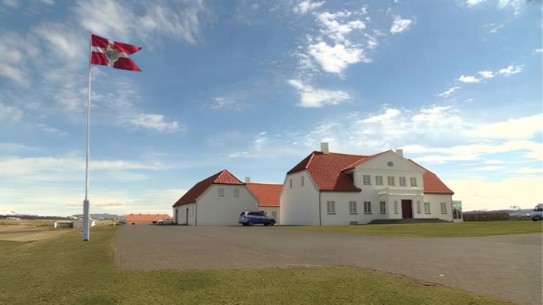
A keynote lecture at a conference in Copenhagen organized by the German and Danish institutions and organizations Preußische Historische Kommission, Geheimes Staatsarchiv Preußischer Kulturbesitz, the SAXO Institute, the University of Copenhagen, and The Royal Danish Collection. The lecture was given in English and was entitled “The Kingdom of Iceland, 1918–2028.”
Drawing on the methods and analytical tools of virtual (or counterfactual) history, the lecture explored why monarchy was abolished in Iceland and what would have needed to unfold differently for Icelanders to have chosen to retain a king as their head of state. The presentation was accompanied by slides, but the following excerpts provide a glimpse of the main argument and the concluding remarks:
“To reiterate, the ultimate achievement of independence, with a domestic sovereign in a free, democratic republic, was always the most likely outcome, and a welcome one in the minds of almost all Icelanders then and now, including myself. But most likely does not equal certainty. Let us gradually move away from that which happened to that which might have happened.”
“In conclusion, I think it is safe to say that the establishment of a republic in Iceland, with a domestic sovereign, was a logical step, even though it was not completely inevitable. It can even be seen as a correction of a historical anomaly. After all, there is nothing logical or inherently just in the 20th, let alone the 21st century, about nations in the North Atlantic having as their sovereign an unelected descendant of Prince Christian of Schleswig-Holstein-Sonderburg-Glücksburg, the fourth son of Duke Friedrich of Glücksburg.”
Some of the images used in the presentation were produced with the assistance of artificial intelligence, including the two shown here.